
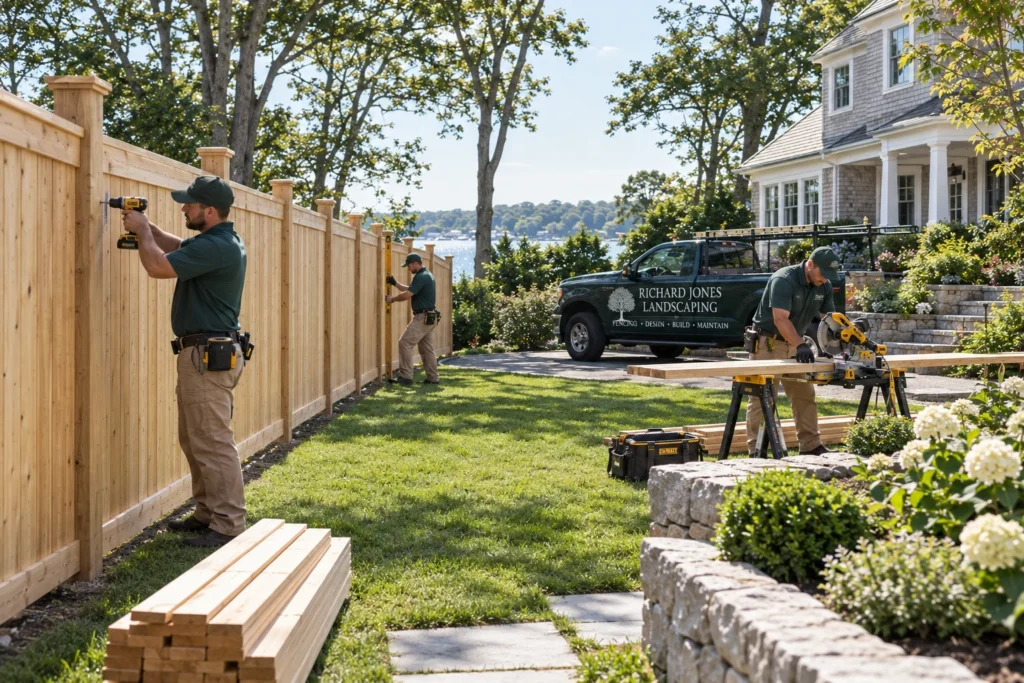
Do You Need a Permit to Build a Fence in Fairfield County, CT?
Short answer: Often, yes, but it depends on your town and your property. Connecticut doesn’t have one statewide fence permit. Each town sets its own rules through its zoning regulations, and some properties face extra review for wetlands, flood zones, or historic districts. Before you sign a contract or dig a single post hole, check with your town’s zoning office.
That’s the quick version. Here’s what to look at in more detail, so you know what to ask and what to expect. If you’re ready to talk through a project, you can see our fence installation services or browse recent work.
Who decides whether you need a fence permit?
Your town decides, not the state. Greenwich, Darien, New Canaan, Stamford, Westport, and the other towns around here each have their own zoning regulations, and those regulations often cover fence height, placement, and sometimes materials.
Most towns have a zoning enforcement officer or a planning and zoning office that can tell you what applies to your address. A short phone call or email usually saves a lot of trouble later.
Here’s where to start:
- Greenwich: Greenwich planning and zoning page
- Darien: Darien planning and zoning page
- New Canaan: New Canaan land use page
- Other towns we serve: Norwalk, Wilton, and Fairfield official zoning pages
What do fence regulations usually cover?
Rules vary by town, but these topics come up most often when homeowners plan a fence:
- Height. Many towns limit how tall a fence can be, and the limit is often different in a front yard than in a side or back yard. A fence that works in the backyard may not be allowed along the street.
- Setbacks. Some towns require a fence to sit a certain distance from the property line or the road. Corner lots can have their own rules because of sight lines at intersections.
- Materials and style. Certain materials may be restricted, and some neighborhoods prefer open, decorative styles over solid privacy panels, especially at the front of a property.
- Pool fencing. A fence around a pool is treated differently from an ordinary yard fence. Pool barriers have specific safety requirements and often involve the building department. If a fence is part of a pool project, ask about this early.
- Gates and driveways. Gate placement, width, and swing direction can matter for emergency access and traffic visibility.
Will wetlands or flood zones affect my fence?
They can, and homeowners miss this one most often. Larger Fairfield County properties frequently include streams, ponds, wet areas, or steep, wooded land. Connecticut towns regulate work in and near wetlands and watercourses through their inland wetlands commissions. Fence posts, clearing, and grading near a regulated area may need approval even when the fence would be fine anywhere else on the lot.
Properties closer to the Sound may also sit in a flood zone or coastal area, which can add its own requirements. If your property has water on it or nearby, mention that when you call the town. It’s also worth planning the fence together with your landscape design so grading and drainage work with it, not against it.
What about historic districts and HOAs?
Some neighborhoods fall within a local historic district, where exterior changes, including fences, can need review before work starts. If your home is older or in a designated area, ask about this.
If you live in a community with a homeowners association, check its rules too. An HOA may have its own approval process, approved materials or height limits that are stricter than the town’s. Town approval and HOA approval are separate, and you generally need both.
Do I need to know exactly where my property line is?
Yes. Fences end up in the wrong place surprisingly often, usually because someone guessed at the boundary. A fence built over the line can lead to a dispute with a neighbor or a costly move later.
If you don’t have a recent survey or can’t find your boundary markers, a licensed land surveyor can mark the line. That’s a small cost compared with rebuilding a fence. Many homeowners also set the fence slightly inside the boundary, which leaves room to maintain both sides.
Why call 811 before any digging?
Before posts go in the ground, underground utilities need to be marked. Connecticut requires a call to 811 (Call Before You Dig) ahead of excavation. The service is free, and it protects gas, electric, water and other buried lines. [CONFIRM AND EDIT: add whether you place the 811 request for clients.]
A simple checklist before you hire a fence contractor
- Find your property survey or plot plan, or arrange to have the boundary marked.
- Call your town’s zoning office and ask what applies to a fence at your address.
- Ask whether your property is near wetlands, a watercourse, a flood zone or a historic district.
- Check your HOA rules if you have one.
- Decide where gates need to go and how you’ll use them.
- Ask any contractor you’re considering how they handle permits, utility marking and approvals. [CONFIRM AND EDIT: add a line describing how Richard Jones Landscaping handles this.]
Frequently asked questions
Do I need a permit to build a fence in Connecticut?
Connecticut doesn’t have a single statewide rule for residential fences. Requirements come from your town’s zoning regulations, so the answer depends on where you live and what you’re building. Pool fences and fences near wetlands often have additional requirements.
How tall can a fence be in Greenwich, Darien or New Canaan?
Each town sets its own height limits, and they often differ between front, side, and rear yards. Contact your town’s zoning office for the current limit at your address, since rules can change.
Can I build a fence right on my property line?
That depends on local setback rules and where your true boundary is. A survey is the best way to know for certain, and many homeowners set a fence slightly inside the line.
Do I need approval from my HOA as well as the town?
If your property is in an HOA, usually yes. The town and the HOA review fences separately, and the HOA’s rules may be stricter.
Who is responsible for getting the permit, the contractor or me?
That varies by contractor and by project. Ask who is handling permits and approvals before you sign, and get the answer in writing. [CONFIRM AND EDIT: add how you handle this.]
Planning a fence in Fairfield County?
Richard Jones Landscaping has served Fairfield County homes and estates since 1985. Our fencing services include wood privacy fencing, decorative fencing, pool-area fencing, and gates. We can walk your fence line with you, talk through placement and materials, and coordinate plantings and masonry or hardscaping around it so the finished result feels like part of the property. For ongoing care after the fence goes in, our estate property management service keeps everything looking its best year-round.
Request a free fencing estimate or call 203 588 0038.
Rules change, and every property is different. This article is a general overview, not legal advice. Always confirm current requirements with your town’s zoning office before you build.