
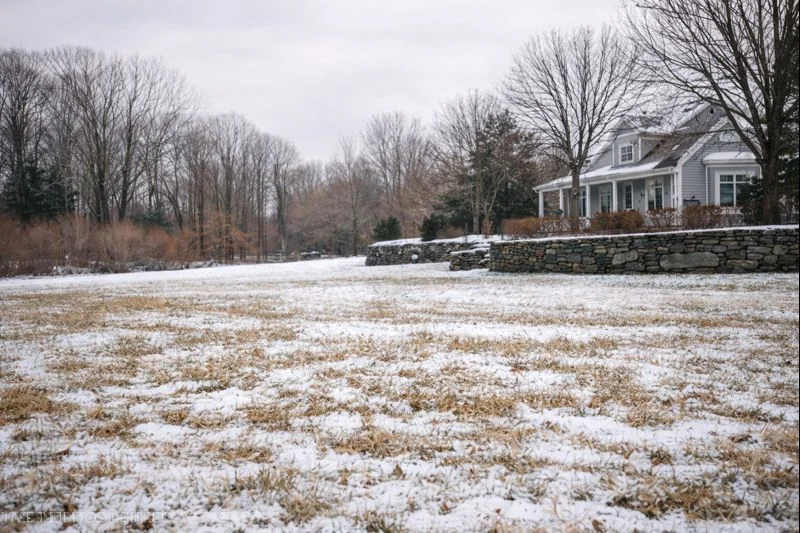
Winter lawn care in Fairfield County, Connecticut, is less about doing more and more and more about not doing the wrong things.
By January, lawns across Stamford, Greenwich, Darien, New Canaan, Westport, Norwalk, and Wilton are dormant. Growth has stopped, soil temperatures are low, and most damage that happens now can’t be fixed until spring.
As a local lawn care company serving Lower Fairfield County for decades, we see the same winter mistakes every year, often caused by well-meaning advice that doesn’t apply to our coastal and inland conditions.
This guide explains exactly what you should and shouldn’t do for your lawn in winter, and how to set yourself up for a healthier spring.
First, Understand What Happens to Lawns in Winter
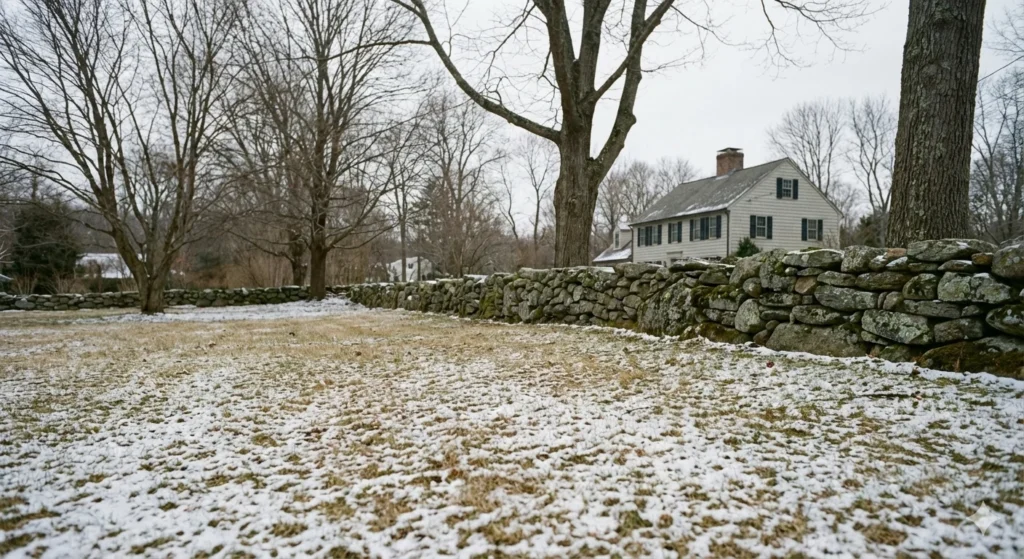
In winter, cool-season grasses common in Fairfield County (like Kentucky bluegrass, fescue, and rye) go dormant. That means:
- Grass stops growing
- Nutrients are not actively absorbed
- Soil can become compacted when frozen or saturated
- Damage now often shows up weeks later in the spring
This is why winter lawn care is mostly about protection and planning, not treatments.
What You SHOULD Do for Your Lawn in Winter
1. Limit Foot Traffic on Frozen or Snow-Covered Grass
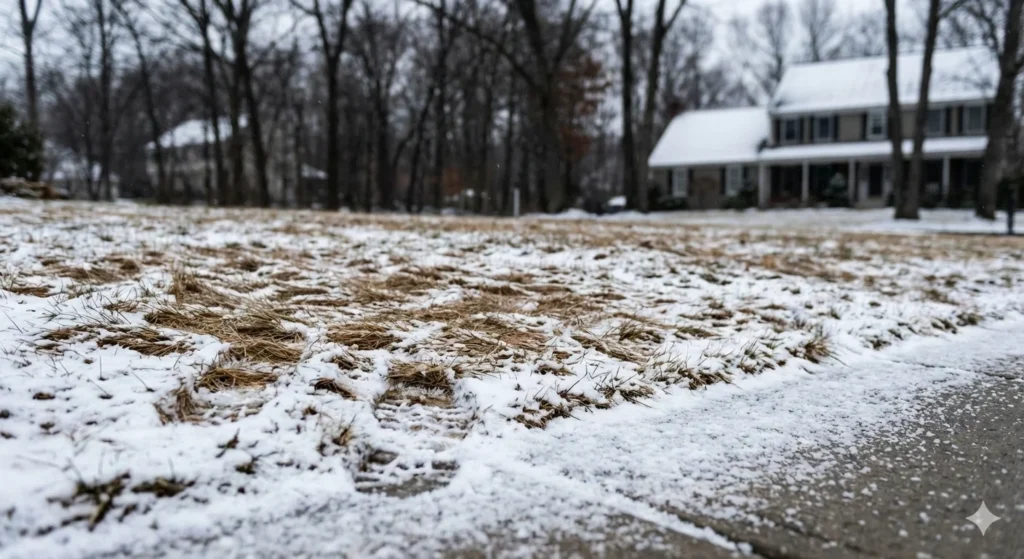
Walking repeatedly on frozen turf — especially in shaded areas — can crush grass crowns and compact soil. This is one of the most common causes of thinning lawns we see in spring, particularly in New Canaan, Wilton, and wooded parts of Westport.
If possible:
- Keep pets and kids off frozen lawns
- Avoid creating repeated walking paths
- Shovel walkways promptly to prevent shortcuts across turf
2. Be Careful With Ice Melt Near Lawns
Salt damage is a major winter issue in coastal towns like Greenwich, Stamford, and Darien. Sodium-based ice melt can burn turf and disrupt soil structure.
If you need ice control near grass:
- Use calcium magnesium acetate (CMA) when possible
- Apply sparingly
- Avoid piling snow mixed with salt onto lawn areas
3. Gently Remove Heavy Debris (If Needed)
If branches or debris fall onto your lawn during winter storms, carefully remove them when the ground is not frozen. Dragging heavy debris across frozen turf can cause more damage than leaving it temporarily.
4. Start Planning for Spring Lawn Care Now
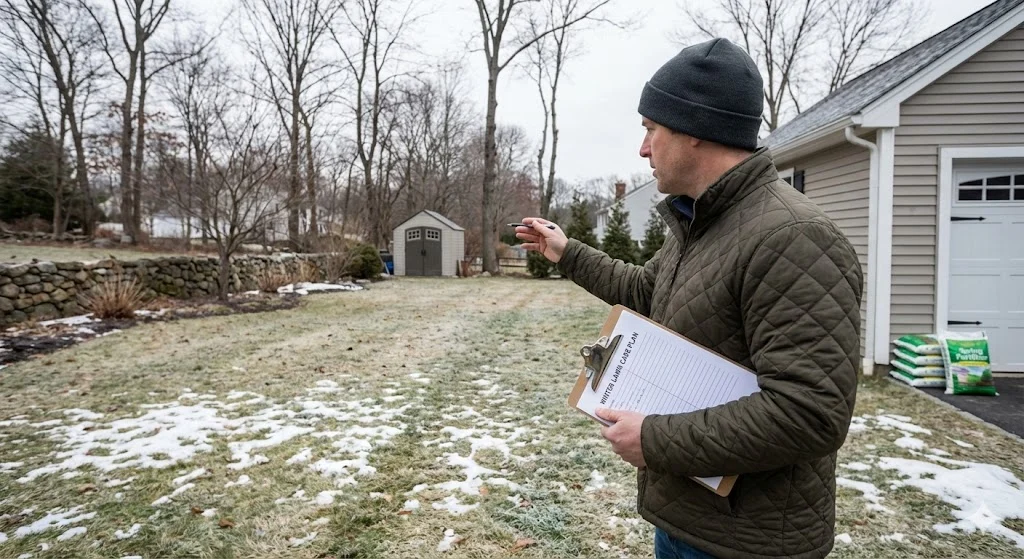
Winter is actually the best time to plan your spring lawn care program.
Why?
- Early scheduling ensures proper timing
- Aeration and overseeding calendars fill quickly
- Spring success depends on preparation, not last-minute treatments
If you haven’t already, this is the ideal time to review your spring lawn care timeline.
→ View our Spring Lawn Care Timeline for Greenwich, Darien & New Canaan
What You SHOULD NOT Do for Your Lawn in Winter
1. Do NOT Fertilize in Winter
Fertilizing dormant grass is one of the most common — and costly — mistakes homeowners make.
In winter:
- Grass cannot absorb nutrients
- Fertilizer runoff increases
- You risk encouraging disease once temperatures fluctuate
Proper fertilization timing in Fairfield County typically begins in early spring, depending on soil temperature — not the calendar.
2. Do NOT Rake or Dethatch Frozen Grass
Raking frozen or semi-frozen turf can rip grass crowns from the soil. If you’re seeing matted grass or light snow mold, wait until spring when the lawn is actively growing.
3. Do NOT Apply Weed Control Products
Winter weeds are rarely controlled effectively with herbicides in January or February. Treatments applied now are largely ineffective and unnecessary.
4. Do NOT Panic About How Your Lawn Looks
Brown, dull, or flattened grass is completely normal in winter. Many lawns that look “dead” in February rebound beautifully with proper spring care.
Winter Lawn Care Differences in Lower Fairfield County
One reason generic lawn care advice fails is that Fairfield County lawns are not all the same.
- Coastal areas (Greenwich, Stamford, Darien) deal with higher humidity, salt exposure, and snow mold risk
- Inland towns (New Canaan, Wilton) experience colder nights and heavier soil compaction
- Mature properties throughout Westport and Norwalk often struggle with shade-related thinning
That’s why winter preparation — and spring timing — should always be adjusted locally.
What to Expect Next: Preparing for Spring
If you’re reading this in January or February, you’re right on time.
The next steps for most Fairfield County lawns include:
- Early spring cleanup
- Proper fertilization timing
- Aeration and overseeding planning
- Soil and turf condition evaluation
→ Learn more about our lawn care services in Stamford, CT
Need Help Planning Your Lawn Care for Spring?
As a locally owned lawn care and landscaping company serving Lower Fairfield County for over 40 years, we help homeowners avoid costly mistakes and get better results — starting with proper timing.
Serving Stamford, Greenwich, Darien, New Canaan, Westport, Norwalk, and Wilton.