
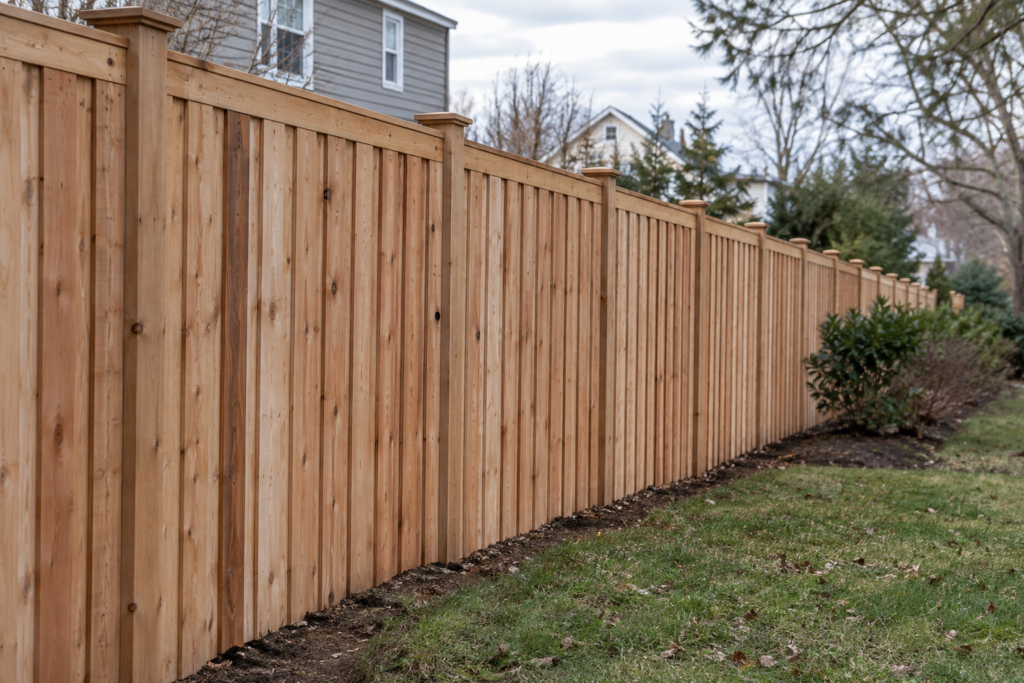
Cedar usually costs more up front but lasts longer, naturally resists rot and insects, and holds its shape better through freeze-thaw cycles. Pressure-treated pine costs less and can work well on a budget or for a fence you plan to stain regularly. For most Fairfield County homeowners who want a privacy fence they won’t think about for years, cedar is the more common choice.
The right answer depends on your budget, how the fence will look, and how much upkeep you’re willing to do. Below we compare the options, explain how each handles New England weather, and point out the installation details that matter as much as the wood itself. If you haven’t checked local rules yet, start with our guide to fence permits in Fairfield County.
How do cedar and pressure-treated wood compare?
Here’s a side-by-side look at the woods most often used for residential privacy fences in the Northeast.
| Western red cedar | Higher | About 15 to 30 years | Low to moderate; stain or seal optional | Long-term privacy fences, a natural look, low maintenance |
| Northern white cedar | Moderate | About 15 to 25 years | Low to moderate; weathers to silver gray | Rustic and traditional New England styles |
| Pressure-treated pine | Lower | About 10 to 20 years | Moderate to high; needs sealing or staining | Tighter budgets, painted or stained fences |
Lifespans are general industry ranges, not guarantees. Installation quality, post depth, drainage, and upkeep can move a fence well above or below these numbers. [CONFIRM AND EDIT: list the woods you actually install and add your own price guidance or typical project range if you want to share one.]
Why does cedar hold up well in Connecticut?
Connecticut fences deal with a lot: snow, ice, heavy spring rain, humid summers, and repeated freeze-thaw cycles. Wood moves as it takes on and loses moisture, and that movement is what causes warping, cupping and split boards.
Cedar has two advantages here. It contains natural oils that help it resist rot and insects, and it’s relatively stable, so boards tend to stay straighter than many other options. It’s also lighter than most alternatives, which puts less strain on posts and gate hardware over time.
If you leave cedar untreated, it weathers to a soft silver gray. Many homeowners like that look, especially with traditional New England homes. If you prefer the original warm color, a stain or sealer with UV protection slows the graying.
When does pressure-treated wood make sense?
Pressure-treated pine is a practical choice in the right situation. It costs less per foot, which matters on a long fence line, and the treatment protects it from rot and insects. It also takes paint and stain well if you want a specific color.
The trade-offs are worth knowing. Treated boards often arrive wet and can shrink, twist, or crack as they dry, so a fence may need a season to settle. Many people also find that treated wood needs sealing or staining sooner and more often to look good.
Pressure-treated wood is often a smart pick for fence posts, even on a cedar fence, where ground contact is the biggest risk. Ask any contractor which treatment rating they use for posts, since wood rated for ground contact lasts far longer in the soil.
Which wood fence style gives the right amount of privacy?
The style you pick changes how private, how windy, and how open the space feels. Common wood privacy and semi-private styles include:
- Solid board privacy fence. Boards set tightly together for full screening. Best around pools, patios, and busy roads.
- Board on board. Overlapping boards that stay private even as the wood shrinks, since gaps are covered.
- Shadow box. Boards alternate on each side of the rails. It looks the same from both directions and lets some air through, which helps in windy spots.
- Spaced or semi-private. Narrow gaps between boards give partial screening while keeping some light and views. These suit larger properties where a fully closed fence would feel heavy.
Height and placement rules can limit what’s allowed, especially along the street, so check before you choose a style. Our fence permits guide explains what to ask your town. You can also see finished examples on our project gallery.
Should I stain, seal, or let a wood fence weather?
Any of the three can be right. It comes down to the look you want and the time you’re willing to spend.
- Let it weather. Cedar can be left natural and will turn silver-gray. This is the lowest-maintenance route.
- Seal or use a clear finish. This slows moisture damage and keeps more of the original color, though it needs reapplying every few years.
- Stain or paint. This gives full color control and is common on pressure-treated fences. It also asks for the most upkeep, since finishes wear and need refreshing.
Whichever you choose, wait for new wood to dry out before finishing it, and keep plantings, mulch, and soil from piling up against the bottom boards. Trapped moisture shortens the life of any wood fence.
Why do posts and footings matter as much as the wood?
Most fence failures start at the posts, not the boards. In Connecticut, soil freezes and thaws every winter, and a post set too shallow can heave upward or lean as the ground moves. Heavy clay, poor drainage, and sloping ground make it worse.
Good installation helps a great deal:
- Posts set below the frost line, with solid footings
- Gravel or another drainage layer at the base where the soil calls for it
- Posts spaced to suit the weight of the fence and the wind load
- Sturdy gate posts, since gates carry the most stress
This is why the contractor you choose matters about as much as the wood. On larger properties with grades, trees, and drainage to work around, the fence line often needs adjusting on site. We walk the proposed route with you before work starts, and can coordinate landscape design and masonry or hardscaping so the whole project fits together.
How do I choose the right wood for my fence?
A few questions usually settle it:
- How long do you want it to last? For a fence you want to forget about, cedar is the usual answer.
- What’s the budget? Pressure-treated wood lowers upfront cost, especially on long runs.
- What look do you want? Natural and weathered favors cedar. A specific color favors a stained or painted finish.
- How much upkeep will you take on? Less maintenance points to cedar. More frequent finishing is easier with pressure-treated.
- What are the site conditions? Wet ground, slopes, and mature trees call for careful post and drainage planning with any wood.
A site visit helps because grade, exposure and your existing landscape change the best answer. If the fence is part of a larger project, we can plan it with your plantings so the finished property feels intentional.
Frequently asked questions
How long does a cedar fence last in Connecticut?
A well-installed cedar fence commonly lasts about 15 to 30 years. Post depth, drainage and upkeep make the biggest difference, so the actual number varies by property.
Is cedar better than pressure-treated wood for a fence?
Cedar generally lasts longer, resists rot naturally, and stays straighter, but it costs more up front. Pressure-treated wood is cheaper and works well with regular staining. Which is better depends on your budget and how much upkeep you want.
Do I have to stain a cedar fence?
No. Cedar can be left natural and will weather to a silver gray. Staining or sealing is optional and mainly keeps the original color longer.
What’s the best fence style for privacy?
Solid board and board-on-board fences give the most privacy. Shadow box and spaced styles offer partial screening with more airflow and light.
How tall can a privacy fence be in Connecticut?
Height limits are set by each town and often differ for front, side, and rear yards. Check with your local zoning office. Our fence permits guide explains what to ask.
What causes a wood fence to lean or fail?
Usually the posts. Shallow footings, poor drainage, and frost heave are the most common causes in Connecticut, more often than the boards themselves.
Thinking about a wood privacy fence?
Richard Jones Landscaping has served homes and estates across Fairfield County since 1985, including Greenwich, Darien and New Canaan. Our fencing services include wood privacy and semi-private fencing, decorative fencing, pool-area fencing, and gates. We’ll walk your property with you, talk through wood, style, and placement, and plan the fence alongside your landscape. After it’s installed, our estate property management service can keep the whole property cared for year-round.
Request a free fencing estimate or call 203 588 0038.
Wood lifespans and costs vary with the product, installation, and site. This article is a general overview. Always confirm local requirements with your town before you build.